by Adam L Stanley | Mar 4, 2016 | Relationships, Technology
Another blog on eMail Etiquette
About a week ago, I had a four-hour flight. I completely cleaned out my inbox before I boarded the plane.
Inbox: 0
For once, I didn’t use the in-flight WiFi to check anything; I just relaxed, read my Kindle on Android, and slept as soundly as I could despite the guy behind me snoring rather loudly. When I landed, I turned on my phone (I swear, American Airlines, it was in airplane mode during the flight), and glanced briefly at my inbox.
Guess how many new e-mails I had? 20? 50?
Nope. I had 100 unread emails. So roughly 25/hour came in as I was 35K feet above — and this wasn’t even during core working hours.
I am not THAT GUY that wants to return to the days of snail mail. Nor am I one that says we must declare “email amnesty” or “war on email”. The fact is, e-mail made work effective, yes — and it allowed people on opposite sides of the globe to collaborate in a much easier fashion — but it’s also a giant hit to productivity. A big, fat, time sinking, eyeball tiring, emotions misreading, productivity drain.
Quick stats: 89 billion business-related e-mails were sent daily in 2014; by 2015, that number was 100 billion, and by the end of 2016, it’s going to be around 116B. That’s the equivalent of everyone on the planet sending 15-20 business e-mails per day (which is even more absurd if you consider that only around 40% of the world population has an internet connection today).
E-mail is a productivity problem because while it’s a way to discuss work and projects, it’s not actually work. Typically, e-mails indicate or reference work that needs to be done — and they do so in a distracting way. An average employee needs 64 seconds to recover their thoughts after reading an e-mail, and they get about 200 e-mails per day. Do that math. By and large, 11.2 hours of a 40-hour work week are spent on e-mails — or slightly over 25 percent.
We can do better. Here are some tips.
 1. Stop the Reply All Culture
Watch this video on the e-mail tree. You’ve all lived through this. Reply-alls can be a nightmare, especially because they are deeply tied to hierarchy — as more senior leaders begin to respond, others feel the need to chime in. A reply all culture is awful for productivity.
Resist the temptation to reply all.
- Consider talking directly to the main point person on the project w/any concerns (Skype great for remote colleagues)
- If you must reply all, begin by thinking about your response and then ask a co-worker if you think it has value
The overall goal for e-mail communication should be value. Frankly, all communication should be about value. Think about the last person that trapped you in the break room telling you stories about their dog when you wanted to finish up an important project. No e-mail should be sent that doesn’t advance a project or an idea, encourage new thinking about a project, or communicate on a norm or deadline. If the value isn’t there, the e-mail doesn’t need to be sent.
2. Understand To vs. CC vs. BCC
If there were a Miss Manners for email etiquette, I believe she would suggest this:
- The “To” field is for the main person the e-mail is directed at, or the person with an immediate deliverable from it
- The “CC” field is for people who should have knowledge of the project, be it tangential team members or senior managers
- BCC should be used sparingly — in the wrong context without explanation, it can fray trust between collaborators; if someone is going to be BCCed, they can probably just be CCed
3. Consider reviewing email only once or twice a day
Being tethered to e-mail throughout the day is bad for productivity, as seen above. Try doing one sweep in the morning — but limit it to 20-30 minutes, as focusing on e-mail tasks first thing in the morning is a waste of a good energy period for most people — and then one in the afternoon. During the day, focus on deep work and perhaps (gasp) actually talking to people.
If you think to yourself you would be out of the loop only checking e-mail twice a day, well consider that going and talking to co-workers is another form of being in the loop that worked quite well before e-mail ever existed for business.
4. Think then write
This can be hard for some people because work projects do become emotional at times, even when we want them to be logical and process-driven — but please think before you write e-mails, as a major general rule. Virtually any e-mail sent can come back on you in a negative way (hardly an ideal situation), and you don’t want to be seen as a co-worker that clogs up people’s productive time.
There are dozens and dozens of potential rules for e-mailing, but above all, try to follow the same rule you should follow with conversations and meetings: add value and respect the time of others we work with. If you start from there, the rest should fall into place with practice. As always, I would love to hear your thoughts.
Be well. Lead On.
Adam
Related Posts:
Put down your smartphones, people!
Five Core Skills every CIO must continuously improve
Khalil Gibran on Leadership
Adam L. Stanley Connections Blog
Technology. Leadership. Food. Life.
AdamLStanley.com
Follow me on Twitter | Connect with me on Linked In | “Like” me on Facebook
by Adam L Stanley | Dec 14, 2015 | Leadership, Relationships, Teamwork
You are the leaders of this organization and hold the keys to success.
At the heart of any mission is talent. Whether building the new rocketship to take us to Mars, raising money for a charity, designing a new service online, or working to be the best manufacturer of the latest series of widgets, talent matters. Which is why it is part of so many of my blogs and why I want to quickly share some thoughts for leaders. This one is targeted to leaders that are at the director/senior manager level, typically CEO – 3 layers. In my org, this would mean people that report to my direct reports. Beyond that, I think they could really be considered for any leaders of teams.
The crux of the message is this: You are the leaders of this organization and hold the keys to success. When given a role as a leader, you must immediately transform yourself from an individual contributor that must manage up, to a leader that must manage up, down, and sideways. And, from time to time, you will need to transform again as peers and managers change significantly, or you go to a new company. In many ways, the global leadership team (my directs) need to serve in the capacity of “Chairman and CEO” of the company we are building. They need to be the ones setting the strategy, selling the vision, and building the dream. But if the next layer down is not willing and ready to be the “President and COO” of our company, the dream can never be achieved.
People may think that I want the directs of my directs to be “empowered”, “trusted”, and held “accountable” because that is the right thing to do for team engagement. Bullocks. Yes, its good for the teams to be treated with respect in this way. However, it is not purely altruistic that I form teams in this manner. The fact of the matter is, our mission DEPENDS on this. We simply cannot be successful if leaders at all levels do not step up to the challenge they have been given to drive change independently. The directs of my directs, I call them the XLT, run our business. That means we expect a lot of them and, likewise, they should expect more from us. So, I wanted to share some thoughts on leadership and my expectations. I am sharing these with my team as well as with my friends here in the online world.
What we expect from you as a manager
- Ownership of transitions Remember back when you were in grade school? Don’t worry, I don’t remember much either. However, I do remember that each new year was a new adventure pretty much directed by my teachers. They showed me how my last year’s learning tied to the new year. They led exercises to introduce me to my new classmates, courses, and books. But in the corporate world, on our mission, we do not always have that luxury. And, frankly, the higher up you go, the less assistance you will get with transitions. Things move faster and are not always as structured as grade school. That means you are in some cases you will be leaving behind responsibilities to take on new ones before fully completing your prior responsibilities. As leaders, you are expected to manage transitions, ensuring that your responsibilities are not only well in hand but all key stakeholders are informed of the change. This is a critical mission success factor.
- Setting expectations I was the News Editor of my college newspaper, Student Life, at Washington University. At the beginning of each editorial cycle, I worked out a set schedule of articles our reporters were expected to write, with dates they were due and no leeway for being late. For a newspaper that came out twice a week, there was only so much flexibility. But the MAJORITY of corporate decisions are not actually this tightly time constrained. So, leaders must help manage expectations. You know your workload, skillsets and available tools better than anyone else. And you are a leader. If you get a request to drive something, you must set expectations. When should I hear from you and how often will you provide updates? Where does this fall within your priority list? Are you not the right person for the job? If you do not set expectations appropriately, the best possible outcome is that you unwittingly meet expectations set by someone else. The worst case is that the expectations that were set were completely unrealistic and you will fail.
- Communication to your teams and peers – Every day, I think about what I want to wear to the office. That is perhaps the only decision I make each day that does not require input from others. Even that one is influenced by others based on conversations I have had about a particular type of shoes (“Adam is the only c-suite exec here that has a pair of Blue shoes”) or my choice of casual or formal business attire (“still wearing a tie, eh, Adam?”). But in a fast-changing, active decision environment, communication is critical. Especially during times of change and transition, our colleagues need to hear from us much more. Decisions are being made that impact lives, impact our clients, impact the markets and how our competitors react to us. We can get into a trap of having so many meetings and conference calls that we forget the basics. Pick up the phone. Reach out to someone for coffee. Write a personal thank you note.
- Driving independently In order for any organization to deliver effectively the massive change programs underway in a competitive environment, we must hold our leaders accountable for driving independently. We must empower them to make decisions without funneling every action through hierarchies. We must trust them to get done their component of the work. And we must hold them accountable for delivering and punish/reward them based on agreed expectations. I blogged on this a while back (See Blog and a poster with these three words in on most of my team’s desks. We must expect XLT leaders to deliver on change programs with less direct intervention. Clear objectives set up front, guidance and support when needed, and recognition/credit when complete. The mission depends on this, as every hour spent by me working on a component of the mission is an hour I cannot sell the dream, build the vision.
What you should expect from your manager
It is easy for senior level executives to set expectations on their subordinate leaders. However, we must recognize that relationships go two ways. If I truly want my leaders to act a certain way, managing transitions, communicating to their teams, and driving independently, my leaders must be able to expect certain things from me.
- Support for this process, including patience and understanding as they build plans, outside assistance if justified, and help identifying the right person to whom you should transition if needed.
- Leading by example when it comes to communication and team engagement.
- Unless you lead them to conclude otherwise, your manager should trust your judgment and be reasonably accepting of the expectations you set.
What are some expectations you have of your leaders and how have you seen them help your mission? Is your manager providing effective space for you to grow as a leader?
Be well. Lead On.
Adam
Related Posts:
Investing in talent for the long-term
Expectations of Leaders at all Levels
Khalil Gibran on Leadership
Lessons from Henry V
Adam Stanley
Adam L. Stanley Connections Blog
Technology. Leadership. Food. Life.
AdamLStanley.com
Follow me on Twitter | Connect with me on Linked In | Join me on Instagram
by Adam L Stanley | Mar 23, 2014 | Leadership, Quotes and Inspiration, Relationships, Teamwork
Building relationships based on respect
People who have worked with me before have heard me on this particular soapbox quite a bit and for those I will suggest maybe they don’t need to read this particular blog. There will be nothing new here. That said, it is perhaps because I continue to hear stories from great talent I have met around the world that are working with people that still do not get it.
It is for these people that I write this blog.
Executives get busy and they get stressed. Markets start to squeeze and pressure mounts, causing many to revert to the old command and control techniques they used in prior decades. When the kitchen heats up, they forget the basics. I believe some need to be reminded of a basic principle that should be obvious to all: Organizations are successful when there is a strong relationship of respect among leaders at all levels.
Now, before I go further, let me be absolutely clear: effective leadership requires adapting your style from time to time to appropriately handle a given challenge. There are times for diplomacy, inclusion, and democracy (e.g., complex problem), and there are times for command and control (e.g., during an urgent crisis). However, underlying your leadership style, and regardless of the type of problem, the relationship of respect must prevail.
A relationship of respect requires three key elements: trust, accountability, and empowerment.
Every team that has worked with me over the past decade will have heard me speak explicitly of the three simple things that I feel are the most important elements of effective, increasingly global, teams. I sincerely hope that those that worked with me before that will see in this blog some of the elements of our team work that worked best even if we never put it to words.
Trust. Accountability. Empowerment.
You will notice that none of them involve bureaucracy, centralization, or added layers without added value! It also does not require being “nice”.
Trust: We must build and maintain levels of trust across borders and business units, recognizing the unique strengths and backgrounds of each individual. In companies that are complex, especially with multiple business units and geographies, the absence of trust can cause money, time, and valuable resources to be wasted on duplicated efforts.
Accountability: We must be a respectful organization and a collegiate one, but all of us must be held accountable as well. Accountability goes hand in hand with trust. When we all understand each other’s respective areas of responsibility and accountability, we create a culture of trust, and we can focus on the services and solutions we deliver and the goals we want to achieve without distraction.
It is important to note that accountability is as much about what is accomplished as it is about how it is accomplished. If you’re an a-hole, regardless of your delivery skills, people will find it hard to trust you and the relationship of respect will be difficult.
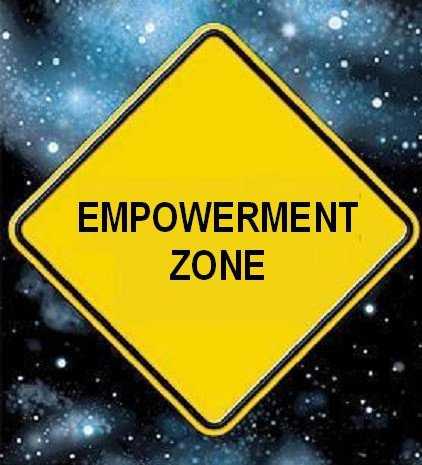
 Empowerment: People must be allowed to make decisions and drive change without being micromanaged and without needing to get multiple approvals; they must be allowed to be leaders. Just as importantly, we must enable those whom we empower. Power without training is not a formula for success. Empowerment is about giving a person the ability to manage something tangible that adds value, but also about working with that individual to help him or her succeed.
Leadership is not easy, and successful teams are elusive to many people. But, with some basic focus on respect and these key principles, you will at minimum have the right foundation for success.
Be Well. Lead On.
Adam
Adam Stanley
Adam L. Stanley Connections Blog
Technology. Leadership. Food. Life.
AdamLStanley.com
Follow me on Twitter | Connect with me on Linked In | “Like†me on Facebook
by Adam L Stanley | Mar 3, 2014 | Leadership, Quotes and Inspiration, Relationships, Teamwork
A New Beginning
Every day is a new beginning. All of life provides opportunities for new beginnings. Whatever has gone wrong, or right, in your life, you can begin again.
Jonathan L. Huie
New beginnings can be nerve wrecking. You spend years building a team, finding the people you can trust to get things done and do so in a values based manner. You drive strategy and create value for shareholders. And you check off so many boxes, proudly getting to a point where you can finally rest and look at the great things you and the team created …. and then you move on to the next challenge.
YIKES!! So much for resting.
“Success is simple. Do what’s right, the right way, at the right time” Arnold H. Glasgow
If I’m honest with myself, I will admit that I will likely never get to truly resting until retirement (target TBD). The fact is, I love gnarly, complex, global challenges and am thankful I have found that in my new role.
Leaders at All Levels
I am incredibly excited about this new adventure and will enjoy getting to meet the new teams around the world. One concept I have constantly addressed that I expect will be highly relevant here is the fact that everyone in today’s technology organizations must be leaders. From time to time, everyone will be called on to make decisions, act independently, and respond to crises without time to go up the chain for days.
You can’t always wait for the guys at the top. Every manager at every level in the organization has an opportunity, big or small, to do something. Every manager’s got some sphere of autonomy. Don’t pass the buck up the line.
Bob Anderson
I blogged about this a while back with “Leaders at All Levels”
Chicago
I LOVE Chicago, the place I have called home for so many years. And I love having the opportunity to give back to the community in which I love. Living in London over the past two years was an amazing adventure, the opportunity to more deeply explore another great city, and to work with colleagues in other European cities. While my prior role required that I moved to London for a while, I am confident that the relationships I built in Chicago will continue to grow. And, of course, I hope to see many of my friends from London throughout the year. Visit!!
As Marilyn Monroe said, “A career is wonderful, but you can’t curl up with it on a cold night.” So I expect my friends to trek on over to see me from time to time, share a lager or a cup of coffee, and warm my heart with their presence!
Let’s Go
Two great quotes come to mind as I contemplate the week ahead and my new adventure:
“If your work is becoming uninteresting, so are you. Work is an inanimate thing and can be made lively and interesting only by injecting yourself into it. Your job is only as big as you are.” George C. Hubbs
“You can’t build a reputation on what you’re going to do.” Henry Ford
I’ve enjoyed my time to reflect on the good and bad aspects of my prior leadership role, and the opportunity to give back via non-profit and civic consulting. But it’s time to go back to corporate, tackle this new and exciting challenge, and meet a new batch of great people with whom I hope to build something great.

Adam Stanley
Adam L. Stanley Connections Blog
Technology. Leadership. Food. Life.
AdamLStanley.com
Follow me on Twitter | Connect with me on Linked In | “Like†me on Facebook
This blog is a revision of a prior post.
by Adam L Stanley | May 28, 2013 | Life, Relationships
My soapbox: Aim for life connections
I met someone this afternoon with whom I truly felt an immediate connection. It was scheduled to be a “career conversation” but instead was an open introduction, over tea, and very casual. The conversation reminded me of a question someone asked me recently: “How can I get better at networking like you?” Those who truly know me realize just how much this question disturbs me. But to many, this would be considered flattery. I do not consider it so at all.
The fact is, I am not a networker. In fact, I detest networking.
Networking is to me a very clinical term, and reminds me of the technology of networking. I know that like various applications in a bank, I am connected to various people. Some linkages were planned and chosen carefully, others stepped in to a role that was by default in my network. Within a network, we depend on each other to work and do our part, and if one portion of the network is significantly damaged, the rest of the network is damaged. I know that to some extent, my success depends on others in the network being able to carry something from me and me in exchange carrying something back. Networking is a fact of corporate (and community) life. However …
I am not a circuit or a router. I am a human being.
When I am in my final minutes of life, perhaps I will think to myself, “If only I had made that one additional link that would have opened up my network to another dimension!” Of course not! I like people. (Of all types! Really! Click here for a blog I wrote on the topic, noting that yes, I even love jerks and *€$holes. I just don’t necessarily want to work with them.) In any corporate network, there must be someone that is necessary but not wanted. God, I never want to be that person.
I prefer to make life connections.
Life connections are not always about business. Some examples:
– Getting to know all of the bartenders at the Artesian Bar at the Langham Hotel in London. Learning how each came from their home countries of Italy, Russia, and elsewhere, to London and why they are so passionate about cocktails. Enjoying a laugh or two whilst enjoying a cocktail or three. Side bonus: I have been introduced to a popular chef/mixologist in my hometown of Chicago for when I return. Plus, the Artesian has become a great place I can bring clients, colleagues, and other connections.
– Building a relationship of trust with my vendor partners and colleagues whereby they share personal details of their lives with me and allow me into their world. Sharing a good meal and a great bottle of wine with no talk of contracts or issues. Side bonus: we find connections we did not know existed and ways in which we can help each other out in so many more ways that traditional sourcing relationships. And, as we move to different roles in different organizations, we can call on each other for advice and support.
– Introducing two people, not because I think they can help each other, but because I just think they are both just really really cool people. Watching them get to know each other and become friends. Side bonus: people have done the same to me, bringing some of the most wonderful people I currently know into my life.
– Having a cocktail party at my house with a mixture of people I have met through work, the neighborhood coffee shop, and other connection points. Looking around and seeing there are people from five different countries with incomes and careers as diverse as chalk and cheese. Witnessing how they all learn from each other: new recipes, fashion styles, tax policy changes, technologies, dating schemes, relationship tips…. Side bonus: Learning myself about all of the above!
Many people will classify the above as examples of networking, and perhaps they are. And, to be clear, I’m not necessarily against networking entirely. I just think it is critical people start with the right perspective. And be honest! If you really just want to meet me for what I can do for you, or who I can introduce, just come out and say it. At least you will save some time! But, I encourage you to take some time to get to know yourself better, enjoy meeting people just because, and see the amazing things that will come out of your connections forged by respect, trust, and integrity. It is amazing how much more one can get from a relationship when he leads from the heart and the mind.
Enough! Off the soapbox, here is some reading …
For those of you who REALLY want to get good at Networking, especially the shy ones, here is a decent CIO magazine article on the topic.
For those of you who like me want to learn how to be a better person and know that success that comes from good just feels better inside, there are a couple of good links for you. Yes, they are a bit kooky. And there will be some who succeed despite being downright bad people (I can name a few.) But, I choose to succeed, or fail, with my values intact. Here are a few links for you:
24 ways to be a better person
How to be a good person in 5 steps
And for those few out there (certainly not a regular reader of my rants) that are downright sinister and yet deep down feel they want to be good, there is even some help for you. I found this one both intriguing and humorous.
Thanks for reading another soapbox rant. I would love to hear what you think about networking and making life connections.
As always, I would love to hear your thoughts.
Be well. Lead On.
Adam
Related Posts:
Who Am I?
Expectations of Leaders at all Levels
Khalil Gibran on Leadership
Lessons from Henry V
Adam Stanley
Adam L. Stanley Connections Blog
Technology. Leadership. Food. Life.
AdamLStanley.com
Follow me on Twitter | Connect with me on Linked In | “Like” me on Facebook


 1. Stop the Reply All Culture



 Building relationships based on respect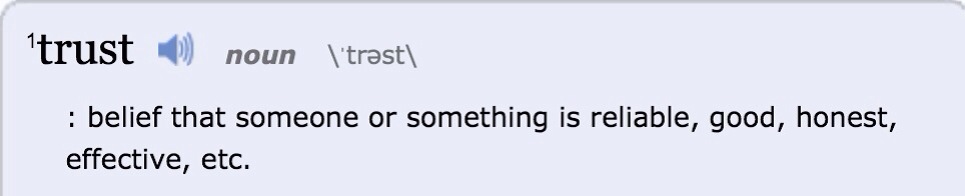

 Empowerment: People must be allowed to make decisions and drive change without being micromanaged and without needing to get multiple approvals; they must be allowed to be leaders. Just as importantly, we must enable those whom we empower. Power without training is not a formula for success. Empowerment is about giving a person the ability to manage something tangible that adds value, but also about working with that individual to help him or her succeed.