by Adam L Stanley | May 6, 2016 | Leadership, Relationships, Technology
Don’t ask for a seat at the table. Claim it!
Stop it. Just stop.
10 years ago, when IT was still an enabling function for most companies, you’d attend trade shows and conferences and there were seemingly endless discussions about “getting a seat at the table.”
Five years ago, this conversation was relevant for many companies that were recognizing the importance of technology to the business — but still not believing CIOs could actually drive the change.
Today, more and more I meet CIOs that are business leaders and run IT. This is a good thing!
But the next step is crucial. Now we need more CIOs and their direct reports claiming their seat at the table so that companies can do more internal promotion and less external recruitment.

But many CIO-chain reports still don’t know how to claim that seat at the business decision-making table. And my soapbox is for these leaders.
The short version: If you want to be relevant, you must be relevant. Do you know the business deeply and are you clear on the key things you can do to grow revenue, improve profitability and drive results? Make sure you do before you try to pull up a chair at the table!
Here are a few tips for those trying to claim their seat:
Stop trying to be the controller and be a partner
A “corporate IT” function focuses too much on rules and restrictions. It’s where business process can often bury actual business results. It doesn’t ask good business questions, and it tells business leaders what they must do, not how they could do. This leads to business leaders consulting with IT only when they have to, and not when they want to discuss strategy.
How to fix: Go watch HBO’s Silicon Valley Season 3, Episode 2 for a laugh about how “IT guys” talk to “sales guys.” Then come back here and realize this: hardcore business decision-makers want conversations and presentations in terms of actionable results — and they want them in their vocabulary, not yours. If you want a seat at the table, start by thinking about your limitations process-wise. Then invert those limitations into what can be done and re-focus your presentation ideas that way. No executive wants to hear a bunch of process tech-speak about neural nets or back-ends. They don’t really care. They want to know how results will be achieved. So you need to provide that context. That’s partnership, instead of a roadblock. Roadblocks don’t typically get the seat at the table.
Have a point of view
In line with the above, one of the potential reasons for my success getting to the table may be the fact that I frankly don’t know all that much about the details of technology. Please don’t ask me how to build a server or write code. There are so many people who know much more than I ever will. That is ok. Leadership isn’t about knowing everything; many managers miss this point. Leadership is about knowing how to drive decisions and results, and who to engage on each topic that is the subject matter expert there.
How to fix: Have a point of view about how technology drives value for your business, helps you engage with clients and colleagues, and wins work. Bring to the table your perspective of how technology is changing your industry.
Know the business and speak the language of the business
I often joke with my teams that every one of my colleagues I meet in the hall has a figure above their head. The figure represents the particular contribution to EBITDA of their service line or division. In order to effectively communicate your contributions, you must be able to make your argument in business terms — not in technology terms– quantifying the value of your proposed involvement in fulfilling the company’s strategy.
How to fix: Understand the mission of your company, but also understand the two sides of strategy. What do I mean by that? There’s a “big speeches” strategy, where a CEO tends to speak in aspirational words and concepts. That’s for public consumption, the media, and regular employees. Then there’s the strategy the CEO discusses with his/her top lieutenants, which tends to be more specific and focused. You need to understand both sides, because you need the aspirational terminology — that vets you to be a major leader and outwardly face new groups of people — but you also need to know the real deal from the closed door meetings. We talk about “code-switching” in society a lot, and it’s crucial in business. You need to be able to quickly switch back and forth from PR-facing top leader to organizational execution internally. They are different languages.
Sell the business
Never forget that every employee of any company must focus on the end customer. Every one. So, maximize every chance you have to tell someone about the company, its products or services. Try to seek out mentors amongst the business development or client account teams that can teach you how to sell the story. Your first job is to run technology, but wouldn’t it be great if a dinner conversation at a charity event you attended led to a new client?
How to fix: This one is blunt, but simple. If you want the seat at the table or the higher salary, you have to sell or be tied to the bigger clients or deals. Those are the people that get the seats first and keep them in most companies. You can make arguments that it shouldn’t be that way, but it is — and will be for a long while still.
Be social
Business is inherently a social enterprise. Relationships are built over coffee, drinks, and being in the trenches during critical projects or incidents. Because you are in technology, you will spend much of your time in the trenches with other technologists. That is great. Getting to know your teams is important. But be sure to spend some time with the colleagues in the business. Be sure there is balance as you don’t want them to think you are just the party guy or the smoozer!
How to fix: Become comfortable with ideas opposite from your own and stop spending time with people just like yourself. The more relationships you build, the closer to the power vortex you can get.
Claim your seat today.
You’ve tried to communicate the value you bring to the company, but executives at your company just don’t get it? Speak Up. Challenge yourself to be more social, to get to better know the business, to sell the business. Have a point of view and make it known. Don’t ask for a seat at the table. Claim it!
Always remember: Business leadership tends to be driven by measurement, value, and relationships. If you understand your value and the corporate value prop, that’s Step 1. Great. If you understand measurement as a whole and how your company tracks and measures goals and KPIs, that’s Step 2. Awesome. If you invest time in building relationships in and out of work — hitting goals, but also networking and schmoozing and putting yourself in front of the key stakeholders — that’s Step 3. Now you’re ready to claim a seat at the table.
As always, I would love to hear your thoughts.
Be well. Lead On.
Adam
Related Posts:
Defining the Perfect Employee – Top Traits Series
Trait 1: Hard working AND talented
Trait 2: Pride in work product
Trait 3: Fun to work with
Investing in talent for the long-term
Adam L. Stanley Connections Blog
Technology. Leadership. Food. Life.
AdamLStanley.com
Follow me on Twitter | Connect with me on Linked In | “Like” me on Facebook
by Adam L Stanley | Mar 4, 2016 | Relationships, Technology
Another blog on eMail Etiquette
About a week ago, I had a four-hour flight. I completely cleaned out my inbox before I boarded the plane.
Inbox: 0
For once, I didn’t use the in-flight WiFi to check anything; I just relaxed, read my Kindle on Android, and slept as soundly as I could despite the guy behind me snoring rather loudly. When I landed, I turned on my phone (I swear, American Airlines, it was in airplane mode during the flight), and glanced briefly at my inbox.
Guess how many new e-mails I had? 20? 50?
Nope. I had 100 unread emails. So roughly 25/hour came in as I was 35K feet above — and this wasn’t even during core working hours.
I am not THAT GUY that wants to return to the days of snail mail. Nor am I one that says we must declare “email amnesty” or “war on email”. The fact is, e-mail made work effective, yes — and it allowed people on opposite sides of the globe to collaborate in a much easier fashion — but it’s also a giant hit to productivity. A big, fat, time sinking, eyeball tiring, emotions misreading, productivity drain.
Quick stats: 89 billion business-related e-mails were sent daily in 2014; by 2015, that number was 100 billion, and by the end of 2016, it’s going to be around 116B. That’s the equivalent of everyone on the planet sending 15-20 business e-mails per day (which is even more absurd if you consider that only around 40% of the world population has an internet connection today).
E-mail is a productivity problem because while it’s a way to discuss work and projects, it’s not actually work. Typically, e-mails indicate or reference work that needs to be done — and they do so in a distracting way. An average employee needs 64 seconds to recover their thoughts after reading an e-mail, and they get about 200 e-mails per day. Do that math. By and large, 11.2 hours of a 40-hour work week are spent on e-mails — or slightly over 25 percent.
We can do better. Here are some tips.
1. Stop the Reply All Culture
Watch this video on the e-mail tree. You’ve all lived through this. Reply-alls can be a nightmare, especially because they are deeply tied to hierarchy — as more senior leaders begin to respond, others feel the need to chime in. A reply all culture is awful for productivity.
Resist the temptation to reply all.
- Consider talking directly to the main point person on the project w/any concerns (Skype great for remote colleagues)
- If you must reply all, begin by thinking about your response and then ask a co-worker if you think it has value
The overall goal for e-mail communication should be value. Frankly, all communication should be about value. Think about the last person that trapped you in the break room telling you stories about their dog when you wanted to finish up an important project. No e-mail should be sent that doesn’t advance a project or an idea, encourage new thinking about a project, or communicate on a norm or deadline. If the value isn’t there, the e-mail doesn’t need to be sent.
2. Understand To vs. CC vs. BCC
If there were a Miss Manners for email etiquette, I believe she would suggest this:
- The “To” field is for the main person the e-mail is directed at, or the person with an immediate deliverable from it
- The “CC” field is for people who should have knowledge of the project, be it tangential team members or senior managers
- BCC should be used sparingly — in the wrong context without explanation, it can fray trust between collaborators; if someone is going to be BCCed, they can probably just be CCed
3. Consider reviewing email only once or twice a day
Being tethered to e-mail throughout the day is bad for productivity, as seen above. Try doing one sweep in the morning — but limit it to 20-30 minutes, as focusing on e-mail tasks first thing in the morning is a waste of a good energy period for most people — and then one in the afternoon. During the day, focus on deep work and perhaps (gasp) actually talking to people.
If you think to yourself you would be out of the loop only checking e-mail twice a day, well consider that going and talking to co-workers is another form of being in the loop that worked quite well before e-mail ever existed for business.
4. Think then write
This can be hard for some people because work projects do become emotional at times, even when we want them to be logical and process-driven — but please think before you write e-mails, as a major general rule. Virtually any e-mail sent can come back on you in a negative way (hardly an ideal situation), and you don’t want to be seen as a co-worker that clogs up people’s productive time.
There are dozens and dozens of potential rules for e-mailing, but above all, try to follow the same rule you should follow with conversations and meetings: add value and respect the time of others we work with. If you start from there, the rest should fall into place with practice. As always, I would love to hear your thoughts.
Be well. Lead On.
Adam
Related Posts:
Put down your smartphones, people!
Five Core Skills every CIO must continuously improve
Khalil Gibran on Leadership
Adam L. Stanley Connections Blog
Technology. Leadership. Food. Life.
AdamLStanley.com
Follow me on Twitter | Connect with me on Linked In | “Like” me on Facebook
by Adam L Stanley | Nov 29, 2014 | Leadership, Life, Relationships, Technology
Could it be that your Mr or Mrs Right is standing in front of you at Starbucks or Protein Bar?
Can you live without it for a week? Day? 5 minutes?
Put down your smartphones people. Let me repeat. Put down your smartphone. Well, after you read this blog of course.
Every morning, I stand in line at Starbucks waiting for my daily grande black eye and roasted ham and swiss sandwich. Yes, a creature of habit, I get the same thing every day, 510 calories of buttery goodness. But I digress. As I stand in line, I look at the diversity of people standing around me. I see tall and short. I see black, white, Latino, and Asian. I see thick and thin. I see business women, artists, bicycle messengers, and lawyers (lots of lawyers, actually). I see gay and straight, tall and short. Lots of people I find attractive, and some you might find attractive even if I do not. And, more often than not, NONE OF THESE PEOPLE ARE ACTUALLY TALKING TO EACH OTHER. No actual engaging in human interaction with other beings. What are they doing? They are on their smartphones.
Texting. Facebooking. Snapchatting. Emailing. Tweeting. Blogging. Calendaring. Working. Planning. Doing just about everything except actually communicating with people nearby.
And all I can think is, what a missed opportunity? Growing up, I remember my mom taking me to the grocery store with her. While waiting in line to checkout, inevitably, she would end up in conversation with the person behind her. My dad would share his opinions with just about everyone he ran into in a local hardware store or at the police station after work. I grew up communicating with people and the love of communicating, coupled with my fascination with people watching, has been with me for decades. Enter smartphones.
And now, yes, I find myself standing in line searching for the latest blog by Switch and Shift, seeing what my colleagues are chatting about on Yammer, religiously following back on Twitter, and fighting the never ending battle to clean out my email inbox (Sad reality: It will never happen. Just accept it.) So, lest I be called a hypocrite, I will admit what I am asking you to do is difficult. INCREDIBLY difficult. Â But let’s try it together.
Let’s put down our cell phones.
1) Set a target for how long you will leave it in a drawer or the car.
Only you can decide what is a stretch but realistic target in terms of period of time. Could be a a week? A day? How about an hour during the business day? 5 minutes?
2) Go somewhere you go fairly regularly, and strike up a conversation with someone around you
During your no cell phone (day/week/hour/minute) make a visit to a grocery store, coffee shop, food spot, office break room, or anywhere you typically find yourself on a fairly regular basis. Do what you normally do EXCEPT use your phone (to completely avoid temptation, pay with … gasp … CASH rather than using your smartphone payment app). If you, like me, get energy from others and are more extroverted, strike up a conversation. If you are more of a people watcher, just observe the traits, attitudes, outfits, hair, whatever! If you are bold, flirt with the amazing person you now realize comes to the same place at the same time every day.
3) Encourage someone else to do the same thing.
You will meet someone cool, notice a new hair style or fashion, or maybe even simply realize for the first time how good your coffee tastes when you drink it piping hot and only focus on the experience. Share that with someone, share it with me or others on this blog. Spread the word.
With so many dating sites around, perhaps some of you are spending this time on these sites, editing your profile and replying to messages? There are sites for Christians, Jews, farmers, baby boomers, gay men and lesbian women, millionaires, and more. And I have many many many friends that are long-term or recently single. As I look around at the heads bowed down, eyes focused on phones and tablets, I can’t help but wonder if perhaps we are missing something fairly basic.
Could it be that your Mr or Mrs Right is standing in front of you at Starbucks or Protein Bar? Look up. Now!
Be Well. Lead On.
Adam
One final note >>>
Pedestrians: Put down your cell phones. Unless you live in a city that has one of these special cellphone lanes. Yeah, I think its pretty sad too!
Cellphone Lane? (China Daily via Reuters)
Adam Stanley
Adam L. Stanley Connections Blog
Technology. Leadership. Food. Life.
AdamLStanley.com
Follow me on Twitter | Connect with me on Linked In | “Like me on Facebook
by Adam L Stanley | Mar 23, 2014 | Leadership, Quotes and Inspiration, Relationships, Teamwork
Building relationships based on respect
People who have worked with me before have heard me on this particular soapbox quite a bit and for those I will suggest maybe they don’t need to read this particular blog. There will be nothing new here. That said, it is perhaps because I continue to hear stories from great talent I have met around the world that are working with people that still do not get it.
It is for these people that I write this blog.
Executives get busy and they get stressed. Markets start to squeeze and pressure mounts, causing many to revert to the old command and control techniques they used in prior decades. When the kitchen heats up, they forget the basics. I believe some need to be reminded of a basic principle that should be obvious to all: Organizations are successful when there is a strong relationship of respect among leaders at all levels.
Now, before I go further, let me be absolutely clear: effective leadership requires adapting your style from time to time to appropriately handle a given challenge. There are times for diplomacy, inclusion, and democracy (e.g., complex problem), and there are times for command and control (e.g., during an urgent crisis). However, underlying your leadership style, and regardless of the type of problem, the relationship of respect must prevail.
A relationship of respect requires three key elements: trust, accountability, and empowerment.
Every team that has worked with me over the past decade will have heard me speak explicitly of the three simple things that I feel are the most important elements of effective, increasingly global, teams. I sincerely hope that those that worked with me before that will see in this blog some of the elements of our team work that worked best even if we never put it to words.
Trust. Accountability. Empowerment.
You will notice that none of them involve bureaucracy, centralization, or added layers without added value! It also does not require being “nice”.
Trust: We must build and maintain levels of trust across borders and business units, recognizing the unique strengths and backgrounds of each individual. In companies that are complex, especially with multiple business units and geographies, the absence of trust can cause money, time, and valuable resources to be wasted on duplicated efforts.
Accountability: We must be a respectful organization and a collegiate one, but all of us must be held accountable as well. Accountability goes hand in hand with trust. When we all understand each other’s respective areas of responsibility and accountability, we create a culture of trust, and we can focus on the services and solutions we deliver and the goals we want to achieve without distraction.
It is important to note that accountability is as much about what is accomplished as it is about how it is accomplished. If you’re an a-hole, regardless of your delivery skills, people will find it hard to trust you and the relationship of respect will be difficult.
 Empowerment: People must be allowed to make decisions and drive change without being micromanaged and without needing to get multiple approvals; they must be allowed to be leaders. Just as importantly, we must enable those whom we empower. Power without training is not a formula for success. Empowerment is about giving a person the ability to manage something tangible that adds value, but also about working with that individual to help him or her succeed.
Leadership is not easy, and successful teams are elusive to many people. But, with some basic focus on respect and these key principles, you will at minimum have the right foundation for success.
Be Well. Lead On.
Adam
Adam Stanley
Adam L. Stanley Connections Blog
Technology. Leadership. Food. Life.
AdamLStanley.com
Follow me on Twitter | Connect with me on Linked In | “Like†me on Facebook
by Adam L Stanley | Dec 18, 2013 | Life
When you carry out acts of kindness you get a wonderful feeling inside. It is as though something inside your body responds and says, yes, this is how I ought to feel.
Harold Kushner
Life is an echo. Karma is a …
Christmas is often the best time to see the true character of people. You see the good and the bad. You see those who find great joy in giving to family, to friends, and to those in need. You see those that seem to take joy mostly in receiving from family and friends. You see those that love unconditionally and show that love through physical and verbal manifestations of caring. And you see those that truly don’t seem to have an ounce of caring inside. Yes, the negative of Christmas is that sometimes it brings out the very worst in people or at least makes the bad that’s already inside much clearer. It highlights the negative like the bright lights on Michigan Ave in Chicago highlight the stores or the shiny garland and ornaments highlight Christmas trees.
Today, my soapbox message is a simple one and it is a message that has been delivered through centuries and ages. From spiritual leaders and deities, to actors, comedians, and politicians; and everyone in between. It is this: Doing good feels good. Loving feels good. Giving feels good. Supporting feels good. Commiserating feels good. Forgiving feels good. And, even better, in addition to feeling good you have the additional benefit that people return all of the above right back to you. Yes, absolutely true and proven time and time again is the Golden Rule that one does unto others as he or she wants done unto him; Do good. Feel good. Receive good.
This is the time to forgive. This is the time to perform a random act of kindness. This is the time to love. This is the time to understand and ask questions. To listen. It is not the time to hold grudges or seek revenge. It is not the time to be angry or jealous. It is not the time to fight over material things or hurt feelings.
I’m posting on #karma today on my facebook page, LinkedIn, Instagram, and twitter. If you follow me on all, you will see several thought provoking images. Confucius, Jesus Christ, Buddha and several other great thinkers and spiritual leaders all seemed to believe that what goes around comes around and it is better to do good thing to do ill.
Thanks for reading another soapbox rant. Smile. What are your thoughts on karma or The Golden Rule? Have you experienced personally or through someone else the results of bad Karma? Seen someone blessed beyond imagining after doing good and giving sacrificially? Share below please. As always, I would love to hear your thoughts.
Be well. Lead On.
Adam
Related Posts:
Who Am I?
Expectations of Leaders at all Levels
Khalil Gibran on Leadership
Lessons from Henry V
Adam Stanley
Adam L. Stanley Connections Blog
Technology. Leadership. Food. Life.
AdamLStanley.com
Follow me on Twitter | Connect with me on Linked In | “Like me on Facebook



 Be social

 1. Stop the Reply All Culture



 Building relationships based on respect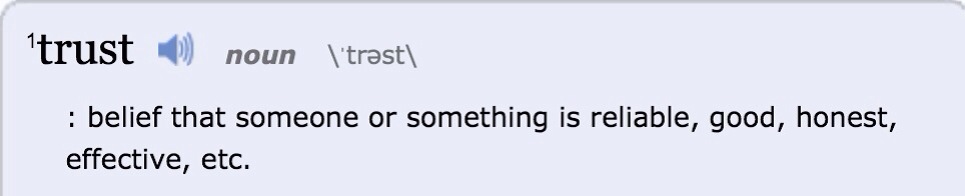

 Empowerment: People must be allowed to make decisions and drive change without being micromanaged and without needing to get multiple approvals; they must be allowed to be leaders. Just as importantly, we must enable those whom we empower. Power without training is not a formula for success. Empowerment is about giving a person the ability to manage something tangible that adds value, but also about working with that individual to help him or her succeed.