My Professional Journey

My Professional Journey

My Professional Journey

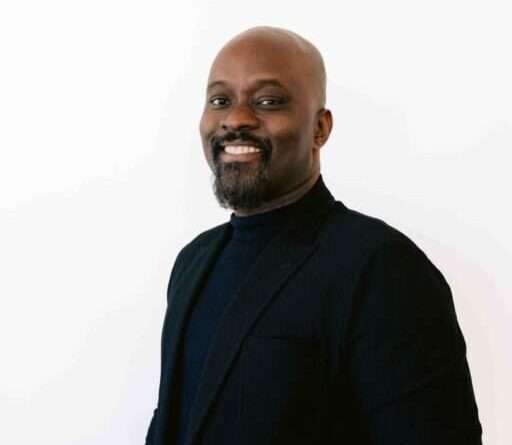
Many people know me for my work in one particular area of my life, but few are aware of the various roles and responsibilities that fill my days and keep me active. I’d like to share a bit about myself and my multifaceted professional journey.

I am currently an independent board director serving on the boards of GATX Corporation, Church Mutual Insurance Company, and UBS Trumbull Property Fund. In addition, I co-lead the Adam Timothy Group, a real estate agency business that advises buyers, sellers, and landlords, and also manages a portfolio of investment properties in North Carolina, Texas, and Mexico.

Previously, I served as the Chief Digital and Technology Officer at Cushman & Wakefield, where I retired after 8 years. Prior to that, I held similar roles at Aon Corporation and Aviva plc. My expertise is in building teams, driving change, and connecting amazing people to achieve great things together. I have been privileged to serve on the boards of 1871 and CREtech.

In addition to my professional roles, I am dedicated to sharing life lessons, teaching as a professor of practice at Washington University and on the faculty of the Stonier Graduate School of the American Bankers Association. I also speak at multiple organizations throughout the year on topics of leadership, diversity, and authentic relationships.

My educational background includes a Bachelor of Science in Finance and International Business from Washington University, an MBA from Wharton, and a Corporate Director Certificate from Harvard. This foundation has provided me with the analytical and strategic skills essential for navigating the complex landscapes of business and real estate.

I thrive during periods of inflection points. I enjoy helping individuals, families, organizations, and companies navigate change to chart the strongest course possible. I combine my love for connecting people with my passion for analysis, transformation, and negotiation to excel in real estate, in the board room, and beyond.

Throughout my career, I’ve always been driven by a desire to help others succeed. Whether it’s guiding a family through the complexities of a real estate transaction, advising a company on strategic decisions, or mentoring the next generation of leaders, my goal is to make a meaningful impact. I believe that by fostering authentic relationships and embracing diversity, we can create stronger, more resilient communities and organizations.

Thank you for taking the time to learn more about me. I look forward to connecting with you and exploring how we can navigate change and achieve great things together.

more POSTS

It’s not about us. It’s about them.

I’ve said this so many times it’s getting old, but some people just don’t seem to listen—and maybe, if I’m honest, I don’t always take my own advice either. Here it is: it really doesn’t matter what you said, how you said it, or what you intended. What matters, if you truly care about the other person, is how they felt.

Read blog >
On Respect and Conversations

On Respect and Conversations

On Respect and Conversations

In recent days, a statement made by a well-known football player has sparked a significant debate. He spoke about women being proud to just be mothers and raise their children. While I wholeheartedly support freedom of speech and opinion, it’s essential to remember that these freedoms invite dialogue from all sides. When we share our views, we must be prepared for responses that may not only support but also challenge our perspectives.

What’s the back story?

Harrison Butker, the kicker for the Kansas City Chiefs, delivered a controversial commencement speech at Benedictine College. In his speech, Butker criticized various contemporary issues and expressed traditional views on gender roles. He emphasized the importance of living according to Catholic values, attacked President Joe Biden for his stance on abortion despite being Catholic, and expressed his views against the LGBTQ+ community during Pride month. Butker also highlighted the significance of traditional family roles, praising his wife for embracing her role as a homemaker, which he considered pivotal to his success.

Butker’s remarks about women centered on his belief that the most fulfilling roles for them were as wives and mothers, suggesting that despite potential career successes, familial roles were of utmost importance. His comments were met with backlash on social media, and various organizations and individuals criticized his views as being out of step with inclusive and diverse societal values. Some on various platforms, however, celebrated him at the same time others were trying to cancel him.

Perspective is Everything

Harrison Butker’s perspective, emphasizing traditional family roles and a particular set of values, may resonate with some who share similar beliefs or have the luxury of choosing such a lifestyle. However, this viewpoint can be challenging for individuals from different socioeconomic backgrounds where such choices are not feasible. Many people must navigate economic realities that require both parents to work, often without the support systems that make such traditional roles possible. This discrepancy highlights a broader societal issue where the idealization of certain family structures does not align with the practicalities faced by many families struggling to balance work, childcare, and financial stability. This contrast becomes particularly stark when considering communities where economic hardship and lack of support structures make traditional family roles not only impractical but impossible.

A while back, I had the opportunity to attend a women’s panel organized by an employee group at my former employer. The conversation delved into the choices between pursuing a career and staying at home to raise children. It highlighted how different life can be depending on one’s circumstances. A moment that particularly resonated with me was when a friend of mine, a Black woman who is an executive director of an organization in Chicago, shared her insights. While other panelists discussed the luxury of having supportive spouses who enabled them to choose their careers freely, she reminded us of a stark reality. For her and her husband, working was not a choice but a necessity, and they still struggled to balance childcare and their careers.

Indeed, there are notable differences in the ability of women from various racial and ethnic backgrounds to choose whether to stay at home or work. Data suggests that Black and Hispanic women are more likely to be primary breadwinners compared to their white counterparts, which indicates they have less choice in deciding to stay home due to economic necessity. Specifically, a significant percentage of Black (67.5%) and Latina (41.4%) mothers are either the primary or sole earners in their families, in contrast to 37% of white mothers. This dynamic points to socioeconomic factors that compel many women of color to remain in the workforce out of necessity rather than choice (Center for American Progress).

Respecting Choices Across the Spectrum

In my journey, both personal and professional, I’ve had the privilege to meet and work with people of incredible diversity, each making life choices that best suit their circumstances and values. I hold immense respect for women like one of my successors, Sal Companieh, the new Chief Digital and Technology Officer at Cushman & Wakefield. Sal has not only excelled in her demanding role but has also raised two outstanding young men who are making their mark on the world. Her ability to balance these critical aspects of her life with grace is nothing short of inspiring. I also deeply admire the single women in my life who, planned or unplanned, had children outside of marriage. These strong individuals work tirelessly, often against significant odds, to provide for and nurture their children. Their dedication and perseverance in ensuring the best for their families while navigating their careers or other challenges is truly commendable.

Similarly, the choice made by stay-at-home dads who decide to focus full-time on family and household responsibilities is worthy of equal respect. These men, often unseen in the broader narrative, contribute immeasurably to their families’ wellbeing by choosing to be the primary caregivers. This role reversal, challenging traditional norms, adds invaluable diversity to the tapestry of family dynamics. And in most cases, it simply makes financial sense.

Each of these stories and the people behind them enrich our understanding of dedication, sacrifice, and love. It’s crucial that we recognize and celebrate the variety of paths that individuals choose, acknowledging that each journey, no matter how different, has its own set of challenges and triumphs. By embracing this diversity, we not only foster a more inclusive society but also learn the profound lesson that every role in life, when chosen thoughtfully and pursued with passion, holds equal importance.

Reflections on Messaging and Intention

My interest is not in canceling the football player for his views. Rather, I encourage him, and indeed all of us, to think about our messaging. It is crucial to frame our opinions not merely as reactions to either backlash that angers us or blind affirmations from supporters, but as expressions crafted with intention and openness to diverse perspectives. By listening genuinely and reflecting on the broad spectrum of life experiences, we can communicate more thoughtfully and contribute positively to the ongoing dialogue in our society. And slow the hatred and vitriol that social media makes us feel has become the norm.
more POSTS

It’s not about us. It’s about them.

I’ve said this so many times it’s getting old, but some people just don’t seem to listen—and maybe, if I’m honest, I don’t always take my own advice either. Here it is: it really doesn’t matter what you said, how you said it, or what you intended. What matters, if you truly care about the other person, is how they felt.

Read blog >

Weekend Reminder for Quarantined Friends

For those of you working from home, I wanted to share a quick weekend reminder:

1. Be grateful. So many people have lost their jobs permanently or are furloughed. I’m Christian and thank God. You might do the same or simply whisper positivity into the Universe.

2. Say thank you. Your family is likely just as stir crazy as you but at least you are working. Instead of just relaxing this weekend, make breakfast for your partner or take your dog on a long walk!

3. Please share. Almost every major company has created employee assistance funds. If you are still getting paid, please give a bit to those who are not. Here is a tracker of company efforts in support of their employees or communities. And here is a broader list.

4. Be safe. Stay home. At this point, I’m listening to my elected officials for sure but following my gut as well. And my gut tends to be a bit more conservative. So I’m staying home and staying safe for a while longer. Please be safe as you are led.

Make friends before you need them.

5. Reach out. Make at least three calls this weekend. And not just to the sick or most vulnerable. Call your single friend working from home alone without a pet. Send a handwritten note to a family member or friend just because. We are all kind of lonely during this crisis, whether we realize it or not.

For more thoughts on how you might use this crazy time for good, read my blogs “Make Friends BEFORE you need them” and “Aim for life connections”. Or start here.

Be well. Lead on.

Adam

Even if protesting, wear your face mask. #staysafe

Adam L. Stanley Connections Blog
Technology. Leadership. Food. Life.

Follow me on Twitter
Connect with me on Linked In

Please also read my perspective on why “All Lives Matter” is not a reality until Black Lives Matter.

Be You. Be True.

National Coming Out Day means a lot for so many people, and I wanted to share briefly why it is important to me.

Until I was around 27, I was not out as a gay man at work or to my family. Since being honest and open with both coworkers and my family, I feel more comfortable at work and in my personal life.

I have experienced greater success because I no longer have to hide a significant part of who I am. I want to encourage that individual who feels they must hide to stop hiding and bring us ALL of who they are. Inclusion is not about “agreeing with” a particular difference. It is about realizing that everyone is unique and that difference provides opportunity: an opportunity to learn and grow, to reach better conclusions, and to meet people that bring new perspectives and experiences.

I invite you to read my blog The Power of Authenticity and to see the article Smashing the Lavender Ceiling: Inside The LGBT World Of CRE for more on why this matters to me.

Finally, if you want to talk to someone about your personal coming out journey, I’m all ears. You will always have a safe zone for discussion with me.

Be well. Lead on.

Adam

Adam L. Stanley Connections Blog
Technology. Leadership. Food. Life.

AdamLStanley.com (Driving Value)

Follow me on Twitter or Instagram

6 signs your business might still be in the dark ages

…and how you can help them emerge.

2018. The fact that I have to write this blog at all is quite surprising but yes, it is in fact necessary. There are still some companies (and industries) stuck in the dark ages.  But, unlike 100 years ago, or even earlier in this decade when Kodak and Blockbuster were struggling (without success) to survive, there are clear warning signs to watch for … look for them and escape before you have an extinct company on your CV.

1. Your IT department is viewed as a necessary evil

It’s extraordinary, isn’t it, that in this tech-saturated world that there are still companies out there where the IT department is about as popular as chopped liver. These companies and their employees see IT as that necessary evil they contact when a PC breaks down, password is lost, or to solve some another niggling problem.In an era where technology has transformed the way we work, shop and live — and techies are now C-suite regulars and modern-day heroes – the few straggler companies that still don’t get it may want to step into the 21st century and make a few important adjustments.

2. Tech is listed as a corporate function

Is technology listed on corporate presentations as a function along with finance and legal?With respect to my friends in finance and legal functions whose work is essential to the success of any company, there’s a problem with technology being seen as a function. The reality is that the line between technology and business is blurring rapidly, and, as I have said many times, the term “digital business” is almost redundant. True forward-thinking companies have long ago elevated IT to the same level as strategy or product development – an integrated element of their business model.

3. Tech is NOT included in earnings reports

Imagine if Netflix, Google, or Facebook had an analyst day without mentioning technology. Ok, that may seem farfetched as these companies are fundamentally technology based. But, to my point that all businesses are becoming digital, it’s almost astonishing when IT initiatives, which are all about the quality of future operations and competitiveness, are absent in CEO calls.Talking too much about technology when you have never mentioned it will of course lead to skepticism, but technology should clearly be a part of your strategy and story.

4. Executives do not have tech objectives

“You manage what you measure” is a common catchphrase. Therefore, company leadership that sees the irrefutable and powerful value of technology will ensure tech goals become annual performance measures for their executives. You could see this as being similar to how adding diversity to annual performance goals has helped some companies change the tide in this area.One global leader I know has only two unique objectives above and beyond the normal financial and operational measures. Both of them are about enhancing client experience through technology and analytics. They came directly from the CEO. That’s how change starts.

5. Same tactics continue to be used

The definition of insanity is doing the same thing over and over, and expecting different results. Yet, some companies still manage and think about problems today the same way they thought about them a decade ago.I’m not just talking about moving from waterfall to agile, though techies love to talk about that transition. I’m talking about literally thinking about problems differently. Technology doesn’t simply enable businesses to be more efficient, it has the power and potential to create entirely new business lines. It can disrupt the current model and displace competitors. The problem is that many companies are still looking for ways that technology can enhance an existing model. That’s old thinking!“You can’t continue to do what you’ve always done to stay ahead and be successful,” is how Paul Chapman, CIO of Box, put it in a recent interview with Apptio in their Emerge ezine.Watch out for people who stick to the narrow word “enablement” when referring to technology. Let’s talk about new revenue models and EBITDA enhancement instead.

6. Your CIO is NOT on the senior management team

Many studies have discussed the reporting structure of company CIOs. In the United States, a Deloitte study found, 50% of CIOs report to the CEO while globally this figure is 46%. But there are many companies where the CIO reports to the CFO, COO or and they thrive.Reporting structure does matter but I would argue that structure alone does not determine whether your business will emerge from the dark ages. A CEO that does not understand or appreciate technology, or one that is too stretched to give it focus, could possible make things worse for a CIO trying to drive digital strategy. A tech savvy and engaged CFO might therefore be a much better reporting structure.What’s most important is that the CIO is seen as a strategic part of the management team. The CIO can report up to the CFO, COO, or CEO — studies have shown that it really doesn’t matter. However, regardless of structure, the CIO leader must be in “the room where it happens” or your business will ultimately falter in our digital age, which continues to transform almost everything with mind-blowing speed.If your technology leader is relegated to the next level and not a part of critical meetings where business strategy, M&A, and revenue growth are discussed, he or she will be trapped in an enabler role. And your business will struggle to keep up.Is this comprehensive list? Probably not. Are there some successful companies out there that do not adhere to the above guidance? Yep.Be well. Lead on.Adam
Adam Stanley
Adam L. Stanley
Adam L. Stanley Connections Blog Technology. Leadership. Food. Life.AdamLStanley.com (Driving Value)Follow me on Twitter or Instagram Connect with me on Linked In
Technology is an opportunity not a threat

Technology is an opportunity not a threat

Someone asked me to explain what I meant when I tell people I view technology as an opportunity but not a “disruption.” Thought I would share with you as well.

I don’t think of technology from the perspective of some threat of disruption. I view it as a means to drive value for clients. The underlying message is “we are not scared”, which drives stupid behaviors. But “we are not stupid” so we focus on our clients and technology.

I argue that if Blockbuster or Kodak REALLY focused on meeting their clients needs, they would still be in business. Lead with what your client needs, trying to get really good at that such that you know before they do what they really need. Then make sure you have tech that can help you more readily meet those needs.

My religion, really, and why I have never been much for chasing shiny red balls.

Be well. Lead on.

Adam

See my other blogs on the dreaded “D” word >>

Disruption: Thinking like our ancestors

Purging overused buzzwords (Part 2 – Disruption)

Adam Stanley
Adam L. Stanley


Adam L. Stanley Connections Blog

Technology. Leadership. Food. Life.

AdamLStanley.com (Driving Value)

Follow me on Twitter or Instagram
Connect with me on Linked In